
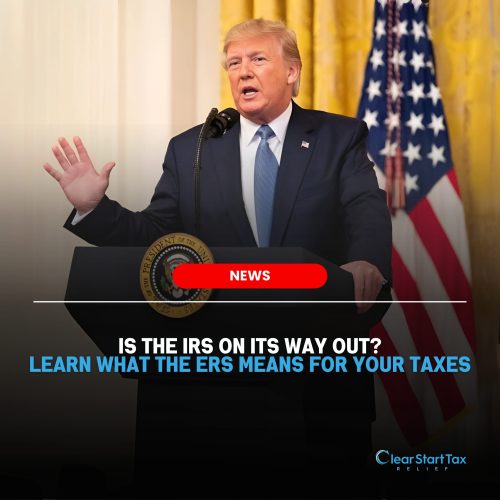
Recent buzz in Washington has taxpayers questioning whether the IRS may soon be replaced—or at least supplemented—by a new federal agency. Former President Donald Trump has proposed a radical shift in America’s tax system by introducing a new federal agency called the “External Revenue Service” (ERS). In a bid to overhaul how the government collects revenue, this agency would focus on taxing foreign trade rather than domestic income. Trump plans to formally announce this initiative on January 20th, aligning it with his broader “America First” economic agenda.
With this bold proposal, many taxpayers are left wondering: Will the ERS replace the IRS, and how could this affect their wallets?
What Exactly Is the External Revenue Service?
The External Revenue Service (ERS) is envisioned as a revolutionary agency designed to collect tariffs, duties, and trade-related revenues from foreign entities. Unlike the Internal Revenue Service (IRS), which taxes American citizens and businesses, the ERS would shift the burden onto international trade partners, creating a new revenue stream for the federal government.
According to Trump’s team, this agency could generate billions of dollars annually by imposing higher tariffs on imported goods and duties on foreign corporations operating in the United States. The goal is to use this revenue to reduce income taxes for American workers and businesses, thereby alleviating the domestic tax burden.
Trump shared his vision for the ERS on Truth Social, calling it a “game-changer” for the American tax system.
Why Is Trump Proposing This Now?
Trump’s announcement on January 20th coincides with the anniversary of his first inauguration, a symbolic move to reignite support for his “America First” policies. His team argues that the ERS is a solution to what they call the inefficiencies of the IRS and an unfair reliance on American taxpayers to fund the government.
By taxing imports and foreign businesses, Trump claims the U.S. can generate enough revenue to reduce—or even eliminate—some domestic taxes. This aligns with his previous trade policies, including tariffs imposed on China and other trading partners during his presidency.
What Does It Mean for U.S. Taxpayers?
Potential Benefits
- Lower Income Taxes: If successful, the ERS could reduce or replace certain federal income taxes, easing the financial burden on American households.
- Economic Boost for U.S. Industries: Higher tariffs could encourage consumers to buy American-made products, boosting domestic manufacturing and job creation.
Potential Drawbacks
- Higher Consumer Prices: When tariffs are imposed on imported goods, the added cost is usually passed on to consumers. For example, goods like electronics, cars, and clothing could become more expensive.
- Trade Wars: Raising tariffs often prompts retaliatory measures from trading partners, potentially leading to reduced exports for U.S. businesses.
January 20th: What to Expect from Trump’s Announcement
On January 20th, Trump is expected to unveil the full details of his External Revenue Service proposal. Analysts anticipate that the announcement will outline specific tariff rates, the agency’s structure, and how it might coexist—or compete—with the IRS.
Some reports suggest tariffs could reach as high as:
- 25% on imports from allies such as Canada and Mexico.
- Up to 60% on Chinese goods, continuing Trump’s trade war policies.
While Trump’s team promises that the ERS will reduce taxes for Americans, critics argue that its implementation could cause inflation and exacerbate economic inequality.
Political Reactions and Debate
Supporters’ Views
Supporters of the ERS argue that it’s a long-overdue reform to a broken tax system. They see it as a way to hold foreign entities accountable and ensure they contribute their fair share to the U.S. economy.
Some Republicans have hailed the proposal as a bold step toward tax reform and a means to strengthen America’s global negotiating position.
Critics’ Concerns
On the other hand, critics, including many economists and Democratic lawmakers, argue that the ERS is a politically motivated distraction. Senator Ron Wyden of Oregon commented, “This isn’t a tax break for American families—it’s a tax hike hidden behind a different name.”
Opponents also fear that such policies could alienate key allies and destabilize international trade relationships.
How Would the ERS Work Alongside the IRS?
Another question on taxpayers’ minds is whether the ERS would replace the IRS entirely. While Trump has not explicitly called for the IRS’s elimination, the ERS could significantly reduce the IRS’s role in funding the federal government.
However, logistical concerns remain:
- Would the ERS require its own bureaucracy, adding to government spending?
- How would tariffs alone fund essential programs like Social Security and Medicare?
These unanswered questions make the proposal a hot topic of debate in Washington.
What’s Next for Taxpayers?
As January 20th approaches, taxpayers should prepare for a potentially dramatic shift in how America funds its government. While the promise of lower income taxes is appealing, the potential trade-offs—including higher prices and global trade disruptions—cannot be ignored.
Ultimately, the success of the ERS will depend on whether Congress supports Trump’s proposal and how it is implemented. Until then, taxpayers should stay informed and consider how these changes could affect their finances.
Final Thoughts
Trump’s vision for an “External Revenue Service” represents a dramatic shift in how America could generate revenue. While the idea of reducing taxes for U.S. citizens is enticing, the potential for higher prices and economic turbulence leaves much to consider.
As this story develops, taxpayers should carefully evaluate the implications of such a shift and participate in discussions that could shape the future of taxation in America.
Need Help With Back Taxes?
Explore how to REDUCE, RESOLVE, or even ELIMINATE your back taxes through the IRS Fresh Start Program.
If you owe back taxes or have IRS issues, click here or call us directly at (877) 542-0412.
Ask for a FREE CONSULTATION.


