
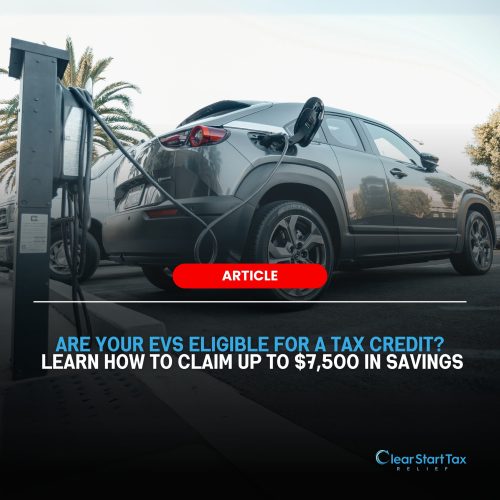
With the introduction of new clean vehicle tax credits in 2023, you may be eligible for financial incentives when purchasing qualified plug-in electric vehicles (EVs) and fuel cell vehicles (FCVs). This blog post will guide you through the requirements and benefits of these credits, helping you understand how to maximize your savings while making a sustainable choice for your transportation needs.
Eligibility Criteria
A clean vehicle tax credit is available if you purchase a new, qualified plug-in electric vehicle (EV) or fuel cell vehicle (FCV) in 2023 or later. To be eligible, you must buy the vehicle for personal use, ensure that it is primarily used in the U.S., and meet specific income limits.
Income Limits
Around the income threshold, your modified adjusted gross income must not exceed $300,000 for married couples filing jointly or a surviving spouse, $225,000 for heads of households, and $150,000 for all other filers. You can base the income test on your modified AGI from the year you took delivery of the vehicle or the previous year.
Vehicle Requirements
Between vehicle specifications, your new plug-in EV or FCV must have a battery capacity of at least 7 kilowatt-hours and a gross vehicle weight rating under 14,000 pounds. It must also be manufactured by a qualified manufacturer and undergo final assembly in North America.
Also, ensure your vehicle meets critical mineral and battery component requirements if purchased on or after April 18, 2023, and falls under the acceptable MSRP limits—$80,000 for vans, SUVs, and trucks, and $55,000 for other vehicles. Confirm these details through the vehicle’s window sticker to ensure eligibility for the tax credit.
Credit Amount
Any new clean vehicle you purchase may qualify for a credit up to $7,500, depending on when you placed the vehicle in service. The amount you can claim varies based on specific criteria, including your vehicle’s battery capacity and whether it meets additional requirements established after April 18, 2023. Understanding these nuances can maximize the benefits you receive from the tax credit.
Amount Breakdown for 2023
After taking delivery of a new plug-in electric vehicle between January 1 and April 17, 2023, you can claim a minimum credit of $3,751. This is based on a $2,500 base amount, with additional credits for battery capacity, allowing for a total of up to $7,500 if the vehicle exceeds specific battery requirements.
Significant Changes Post-April 18, 2023
At this time, the tax credit structure shifted. Vehicles placed in service from April 18, 2023, must meet new critical mineral and battery component requirements to qualify for the full $7,500. Instead, you could receive $3,750 for meeting either the critical minerals requirement or the battery components requirement.
Changes implemented post-April 18, 2023, mean that your vehicle must satisfy stricter criteria to be eligible for the maximum credit. If your vehicle meets the critical mineral requirements, you can claim $3,750. Alternatively, meeting the battery components requirement also yields $3,750. Only those vehicles meeting both criteria will qualify for the full $7,500 credit. Make sure to verify your vehicle’s compliance to secure the maximum benefit.
EVs Eligible for Tax Credit
The new clean vehicle tax credit applies to specific vehicles that meet certain criteria. To be eligible, your vehicle must have a battery capacity of at least 7 kilowatt hours, a gross vehicle weight rating of less than 14,000 pounds, and be produced by a qualified manufacturer who ensures final assembly occurs in North America.
Battery Capacity and Weight
Beside the manufacturing criteria, your vehicle must have a minimum battery capacity of 7 kilowatt hours and weigh less than 14,000 pounds to qualify for the tax credit.
Manufacturer and Assembly Requirements
One important consideration for eligibility is that your vehicle must be made by a qualified manufacturer and undergo final assembly in North America. This requirement ensures that the vehicles you purchase contribute to the local economy while adhering to industry standards.
It is necessary to verify both the manufacturer and assembly information, as vehicles that do not meet these parameters will not qualify for the tax credit. You can find this information on the vehicle’s window sticker, allowing you to confirm whether the vehicle aligns with the stated qualifications before making a purchase.
Process for Claiming the Credit
Despite the complexities involved, claiming the clean vehicle tax credit can be straightforward if you follow the necessary steps. First, ensure you receive the required documentation from your seller, and then accurately fill out the appropriate forms when filing your taxes to qualify for credits up to $7,500 for your new electric or fuel cell vehicle.
Time-of-Sale Report
By purchasing your new clean vehicle, the seller should provide you with a time-of-sale report. This document serves as proof that they reported your purchase information to the IRS, which is necessary for you to claim the tax credit.
Filing Form 8936
Above all, you must file Form 8936, Clean Vehicle Credits, with your tax return for the year in which you took delivery of your vehicle. This form is imperative whether you opted to transfer the credit at the time of sale or plan to claim it later when filing your taxes.
Credit amount depends on your vehicle’s compliance with various criteria, including battery capacity and assembly location. Ensure that you have your vehicle’s VIN handy, as it will be required on Form 8936. Accurate information can streamline the process and help you effectively claim your tax credit, so reviewing the guidelines carefully is advisable.
Reporting Requirements for Sellers
Not adhering to the reporting requirements can jeopardize your ability to claim the clean vehicle tax credit. Sellers must provide you with information regarding your vehicle’s qualifications at the time of sale and report that same information to the IRS. Specifically, they are required to report your name and taxpayer identification number, which is necessary for you to be eligible for the credit. Without this proper reporting, your vehicle may not qualify, so it’s vital to ensure that the seller follows these requirements during your purchase.
Resources for Consumers
After purchasing a new clean vehicle, it’s important to understand the available resources that help you navigate the tax credit process. Numerous government publications are available, like Publication 5866 and Publication 5905, which provide detailed information on eligibility requirements, reporting obligations, and instructions for claiming your tax credit. You can also visit fueleconomy.gov to access tools and resources specific to clean vehicles.
Finding Eligible Vehicles
Eligible vehicles must have a battery capacity of at least 7 kilowatt-hours, a gross vehicle weight rating of less than 14,000 pounds, and must undergo final assembly in North America. You can check these requirements easily through the vehicle’s window sticker or by visiting the manufacturer’s website.
Guidance on Additional Tax Credits
Vehicles qualifying for the new clean vehicle tax credit may also unlock additional credits, such as those aimed at energy-efficient improvements. For instance, if you combine your electric vehicle purchase with home energy upgrades, you might be eligible for significant savings. Explore these opportunities by consulting IRS publications and reputable environmental organizations to maximize your benefits.
Resources regarding additional tax credits are abundant, guiding you through potential savings on energy-efficient appliances, home improvements, and renewable energy installations. It’s advisable to review IRS updates and consult with tax professionals to discover how these credits can complement your clean vehicle tax credit, helping you to achieve more significant financial benefits in your sustainability efforts.
Summing up
Presently, if you purchase a new plug-in electric vehicle or fuel cell vehicle in 2023 or later, you may be eligible for a tax credit up to $7,500. To qualify, ensure your vehicle meets specific criteria, including battery capacity and manufacturer requirements, and consider your modified adjusted gross income. It is vital to receive the proper documentation from the seller and file Form 8936 with your tax return to claim your credit. Stay informed to maximize your benefits and support your transition to cleaner transportation.
Need Help With Back Taxes?
Explore how to REDUCE, RESOLVE, or even ELIMINATE your back taxes through the IRS Fresh Start Program.
If you owe back taxes or have IRS issues, click here or call us directly at (877) 542-0412.
Ask for a FREE CONSULTATION.


